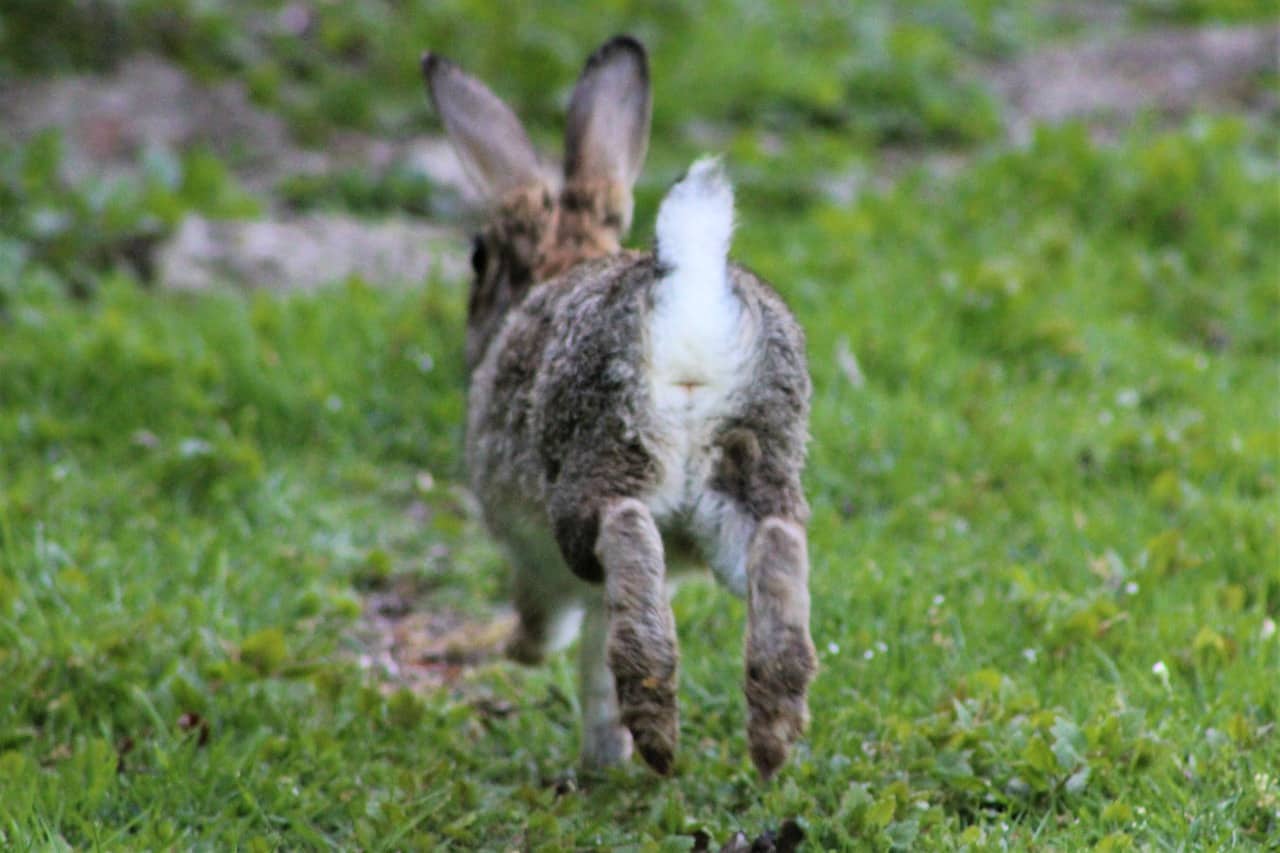
No, rabbits are not scared of the dark. While they cannot see in complete darkness because they lack a tapetum lucidum (the reflective tissue that helps nocturnal animals see at night), rabbits are naturally crepuscular animals that are perfectly comfortable in low-light conditions. Wild rabbits spend much of their time in dark underground burrows, relying on their exceptional hearing and sense of smell to detect predators and navigate their environment.
That said, there is a difference between dim light and total darkness. A rabbit that suddenly finds itself in pitch-black conditions in an unfamiliar environment may become anxious. But the darkness itself is not the problem. It is the inability to use any of their senses effectively that causes stress. Let's take a closer look at how rabbits see, what actually frightens them at night, and how you can keep your rabbit comfortable after dark.
How Do Rabbits See in the Dark?
Rabbits have eyes built for low-light conditions, not complete darkness. Their large eyes sit on the sides of their head, giving them a nearly 360-degree field of vision. This wide field of view helps them see behind them and spot predators approaching from almost any direction, which is critical for a prey animal.
What Is Crepuscular Vision?
Crepuscular vision is adapted for the transitional light periods of dawn and dusk. Rabbits have a high ratio of rod cells to cone cells in their retinas. Rod cells are responsible for detecting light and movement in dim conditions, while cone cells handle color vision in bright light.
This means rabbits see quite well in the soft light of early morning and late evening. They can detect movement and shapes at light levels that would leave humans struggling to see. However, in total darkness with zero ambient light, rabbits are effectively blind, just like we are.
Why Rabbits Lack True Night Vision
Nocturnal animals like cats and owls have a tapetum lucidum, a reflective layer behind the retina that bounces light back through the eye a second time. This is what causes the "eye shine" you see when light hits a cat's eyes in the dark. Rabbits do not have this structure at all.
According to the House Rabbit Society, rabbit eyes are optimized for detecting movement at the edges of their vision rather than for seeing fine detail or navigating in darkness. This makes evolutionary sense. A rabbit needs to spot a hawk or fox moving in its peripheral vision far more than it needs to see clearly in pitch-black conditions.
Rabbits also have limited depth perception directly in front of them due to the lateral placement of their eyes. Their binocular vision (where both eyes overlap) covers only about 10 degrees straight ahead, compared to roughly 120 degrees in humans. This is another reason they rely so heavily on their ears and nose in low-light situations.
Are Rabbits Nocturnal or Crepuscular?
One of the most common misconceptions about rabbits is that they are nocturnal. They are not. Rabbits are crepuscular, meaning their peak activity happens during the hours around sunrise and sunset.
You will notice your rabbit is most energetic and playful during early morning and late evening. During the middle of the day and the middle of the night, rabbits tend to rest or sleep. This pattern holds true for both wild and domestic rabbits, though pet rabbits may adjust their schedule somewhat to match their owner's routine.
This is important to understand because it explains why rabbits never evolved to see in total darkness. Their biology never required it. They are active when there is some natural light available and rest during the darkest and brightest hours of the day.
If you have ever wondered about your rabbit's sleep habits in more detail, you can learn more about how to tell if a rabbit is sleeping.
Do Rabbits Like Being in the Dark?
Rabbits prefer dim light over both bright light and total darkness. In the wild, rabbits spend a significant amount of time inside dark burrows called warrens where they feel protected from predators and extreme weather. So darkness itself is not uncomfortable for them, as long as they feel secure in their surroundings.
Indoor pet rabbits that are familiar with their environment typically have no problem when the lights go off at night. They know the layout of the room, they recognize the smells, and they feel safe. Darkness in a familiar space is not threatening to a well-adjusted rabbit.
Outdoor rabbits in hutches are a different situation. A rabbit sitting in a hutch in complete darkness may feel exposed and vulnerable because it cannot see potential threats approaching. The darkness itself is not the core issue here. It is the lack of a secure, enclosed hiding spot combined with the inability to see approaching danger that causes the anxiety.
Should You Turn Off the Lights for Your Rabbit at Night?
Yes, you should turn off the lights for your rabbit at night. Rabbits need a natural light cycle to regulate their internal body clock, also known as their circadian rhythm. Constant artificial light disrupts this rhythm and can lead to signs of stress, hormonal imbalances, and sleep disturbances over time.
A healthy light schedule for rabbits mirrors natural daylight: approximately 12 to 14 hours of light and 10 to 12 hours of darkness. This cycle tells their body when to be active and when to rest.
Indoor Rabbits
For indoor rabbits, simply follow the natural light pattern in your home. Open curtains during the day to let in natural sunlight and turn off lights at night. Most indoor rabbits adjust to the household schedule without any issues.
If your rabbit's room has no windows, consider using a timer on the lights to maintain a consistent light and dark cycle. Leaving lights on 24 hours a day can confuse your rabbit's body clock and lead to behavioral problems like overgrooming, aggression, or lethargy.
Outdoor Rabbits
Outdoor rabbits naturally experience the day and night cycle, so artificial lighting is not usually necessary. However, if your hutch is in a very exposed area with no ambient light at all, a low-wattage night light nearby can help your rabbit feel less vulnerable.
The key is to avoid bright lights that simulate daytime. A small, warm-toned light that provides just enough glow for the rabbit to make out its surroundings is ideal. You also want to make sure your hutch provides the essentials for comfort and security. Check our guide on what a rabbit needs in its hutch for a full checklist.
Do Rabbits Need a Night Light?
Most rabbits do not need a night light, especially if they live indoors. As long as the room is not absolutely pitch black (and most rooms are not, thanks to streetlights, moonlight, or standby LEDs on electronics), your rabbit will be comfortable.
A night light can be helpful in specific situations:
- New rabbits that are still adjusting to an unfamiliar environment may feel more secure with a soft light
- Outdoor hutch rabbits that are in very dark, exposed locations without natural ambient light
- Senior rabbits or rabbits with vision problems that need extra help navigating their living space
- Rabbits recovering from surgery or illness that may be disoriented or have reduced mobility
If you do use a night light, choose one with a warm, dim glow. Avoid blue or bright white lights, as these can interfere with your rabbit's natural sleep patterns. Red or amber-toned lights are the least disruptive option.
Be careful that the night light does not make your rabbit think it is daytime. Rabbits need darkness to produce melatonin, which regulates their sleep cycle. Too much artificial light at night can cause your rabbit to become depressed or develop irregular activity patterns over time.
What Actually Scares Rabbits at Night?
If your rabbit seems frightened at night, the darkness is probably not the real cause. Rabbits are prey animals, and their fear responses are triggered by perceived threats rather than by the absence of light. Here are the most common causes of nighttime fear in rabbits.
Sudden Loud Noises
Rabbits have extremely sensitive hearing. Sounds that you might not even notice, like a car door slamming, a furnace kicking on, or a wild animal moving outside, can startle a rabbit badly. At night, when the environment is otherwise quiet, these sounds are even more noticeable and alarming. In extreme cases, sudden fright can actually be fatal for rabbits, so minimizing nighttime noise exposure is important.
Unfamiliar Scents
A rabbit's sense of smell is far more powerful than ours. If a new animal has been in the area, if you have used a new cleaning product, or if unusual smells are drifting in from outside, your rabbit may become alert and anxious. At night, when they cannot rely on vision to confirm safety, scent becomes even more important to their sense of security.
Predator Presence
Even indoor rabbits can sense predators nearby. If there are cats, dogs, foxes, raccoons, or other animals outside your home, your rabbit may detect their presence through sound and smell long before you are aware of them. Outdoor rabbits are especially vulnerable to this type of nighttime stress, and predator-proofing the hutch is essential.
Changes in Environment
Moving furniture, rearranging your rabbit's enclosure, or placing them in a new room can make a rabbit feel insecure. Rabbits map their surroundings mentally, and changes to that map can be disorienting, especially in low light when they cannot visually confirm that their space is still safe.
Loneliness and Isolation
Rabbits are social animals that naturally live in groups. A single rabbit left alone at night in a quiet house may feel isolated and vulnerable. This is not specifically about darkness but about the combination of darkness, silence, and being alone without the reassurance of a companion.
Signs Your Rabbit Is Uncomfortable at Night
Rabbits cannot tell you they are scared, but their behavior gives clear signals. Watch for these signs that your rabbit may be struggling with nighttime anxiety:
| Behavior | What It Means |
|---|---|
| Thumping hind legs repeatedly | Warning signal that the rabbit senses danger nearby |
| Hiding and refusing to come out | Feeling unsafe and seeking shelter from a perceived threat |
| Freezing completely still | Prey response to make themselves less visible to predators |
| Rapid breathing or fast nose twitching | Heightened alertness, fear, or anxiety |
| Refusing to eat or drink at night | Stress is overriding normal feeding behavior |
| Aggressive behavior (biting, lunging) | Defensive response from feeling cornered or trapped |
| Pressing flat against the ground | Attempting to become invisible to potential predators |
If you notice any of these behaviors consistently at night, evaluate the environment for potential stressors before assuming the darkness is the problem. Check for noises, scents, drafts, and the presence of other animals in or around your home.
How to Help Your Rabbit Feel Safe at Night
Creating a safe and comfortable nighttime environment for your rabbit is straightforward. Here are proven strategies that experienced breeders use to keep their rabbits calm after dark.
1. Provide a Secure Enclosure
Your rabbit needs an enclosed space where it feels protected on all sides. A hutch or cage with solid walls on at least three sides gives rabbits the burrow-like feeling of security they instinctively seek. Make sure the enclosure is large enough for your rabbit to move around comfortably, stretch out, and stand up on its hind legs without its ears touching the ceiling.
2. Add a Hiding Box or Shelter
Every rabbit should have at least one hiding spot inside their enclosure. A simple cardboard box with an entrance hole cut out, a wooden hideaway, or even a covered tunnel gives your rabbit a place to retreat when it feels anxious. This mimics the safety of an underground burrow and can dramatically reduce nighttime stress.
3. Keep a Consistent Routine
Rabbits are creatures of habit. Feed them at the same times each day, turn lights on and off at consistent times, and avoid making sudden changes to their environment. Predictability reduces anxiety in rabbits because they learn what to expect and when to expect it.
4. Minimize Nighttime Disturbances
Place your rabbit's enclosure in a quiet area of your home, away from windows that face busy streets, external doors that might let in drafts and outside noises, or rooms where family members are active late at night. If total silence is not possible, a low-volume white noise machine or fan can help mask sudden sounds.
5. Consider a Bonded Companion
Rabbits are social animals that feel significantly safer in pairs. A bonded companion provides comfort and security, especially at night when things are quiet and dark. If your single rabbit seems consistently anxious at night, a companion rabbit is worth serious consideration. Just be sure to follow proper bonding procedures to prevent fighting.
6. Use Familiar Bedding and Scents
Avoid washing all of your rabbit's bedding at once. Leave some items with their familiar scent so the enclosure still smells like "home." You can also leave a worn t-shirt near (but not inside) the enclosure so your rabbit can smell your scent, which provides comfort for rabbits that are closely bonded with their owner.
7. Ensure Proper Ventilation and Temperature
Rabbits are sensitive to heat and stuffy conditions. Make sure their sleeping area has adequate airflow, and keep the room at a comfortable temperature between 60 and 70 degrees Fahrenheit (15 to 21 degrees Celsius). Overheating at night can cause restlessness that owners sometimes mistake for fear of the dark.
Should You Cover Your Rabbit's Cage at Night?
Covering your rabbit's cage at night can help some rabbits feel more secure by creating a den-like environment and blocking out visual disturbances like moving shadows or car headlights sweeping through windows. However, whether this works depends on your individual rabbit's temperament. For a detailed breakdown of the pros and cons, read our full guide on whether you should cover your rabbit's cage at night.
If you do cover the cage, use a breathable, lightweight fabric and never cover all sides completely. Air circulation is essential for your rabbit's health. Leave at least one side partially open so fresh air can flow through and your rabbit does not feel trapped.
When to See a Veterinarian
Most nighttime anxiety in rabbits can be resolved with environmental adjustments. However, if your rabbit's behavior changes suddenly, with new thumping, hiding, or refusal to eat at night, it could be a sign of pain or illness rather than fear. Dental problems, GI stasis, ear infections, and urinary issues can all cause behaviors that look like fear or anxiety.
If you have addressed all environmental factors and your rabbit is still showing signs of distress at night, schedule a vet visit to rule out medical causes. According to Veterinary Partner, changes in behavior are often the first sign of illness in rabbits, so it is better to check than to assume it is purely behavioral.
Frequently Asked Questions
Can rabbits see in complete darkness?
No, rabbits cannot see in complete darkness. They lack the tapetum lucidum that gives nocturnal animals their night vision. However, rabbits see well in dim and low-light conditions because they are crepuscular, meaning their eyes are specifically adapted for the lighting at dawn and dusk.
Should I leave a light on for my rabbit at night?
Most rabbits do not need a light on at night, especially if they live indoors where some ambient light naturally filters in. Rabbits need a natural dark period to regulate their body clock and melatonin production. A small, warm-toned night light is fine if your rabbit seems anxious, but avoid bright lights that simulate daytime.
Why is my rabbit thumping at night?
Thumping is a warning signal that your rabbit senses something alarming. Common nighttime triggers include unfamiliar noises from outside, the scent of wild animals near your home, or sudden changes in the environment. Investigate potential stressors rather than assuming the darkness itself is frightening your rabbit.
Do wild rabbits live in complete darkness?
Yes, wild rabbits spend a large portion of their day resting inside dark underground burrows called warrens. They feel completely safe in these dark spaces because the burrow provides physical protection from predators. This shows that rabbits are naturally comfortable with darkness when they have a secure, enclosed environment.
Is it cruel to keep a rabbit in a dark room all day?
Keeping a rabbit in a dark room 24 hours a day is harmful. While rabbits need nighttime darkness for healthy sleep and melatonin production, they also need exposure to natural or simulated daylight during the day. A full 24-hour dark environment disrupts their circadian rhythm and can lead to depression, lethargy, and other health problems.
Cite this article:
BunnySync (March 3, 2026) Are Rabbits Scared of the Dark? Rabbit Night Vision Explained. Retrieved from https://bunnysync.com/blog/are-rabbits-scared-of-the-dark.
"Are Rabbits Scared of the Dark? Rabbit Night Vision Explained." BunnySync - March 3, 2026, https://bunnysync.com/blog/are-rabbits-scared-of-the-dark
Sources and Further Reading
- House Rabbit Society: Rabbit Vision FAQ
- Veterinary Partner: Rabbit Care Basics
- Varga, Molly. Textbook of Rabbit Medicine. 2nd ed., Butterworth-Heinemann, 2013.
- Buseth, Marit Emilie., and Richard A. Saunders. Rabbit Behaviour, Health, and Care. CABI, 2014.