Drug Dosage Calculator for Rabbits
A tool that automatically computes the mean recommended dose and volume of your rabbit's medicine.
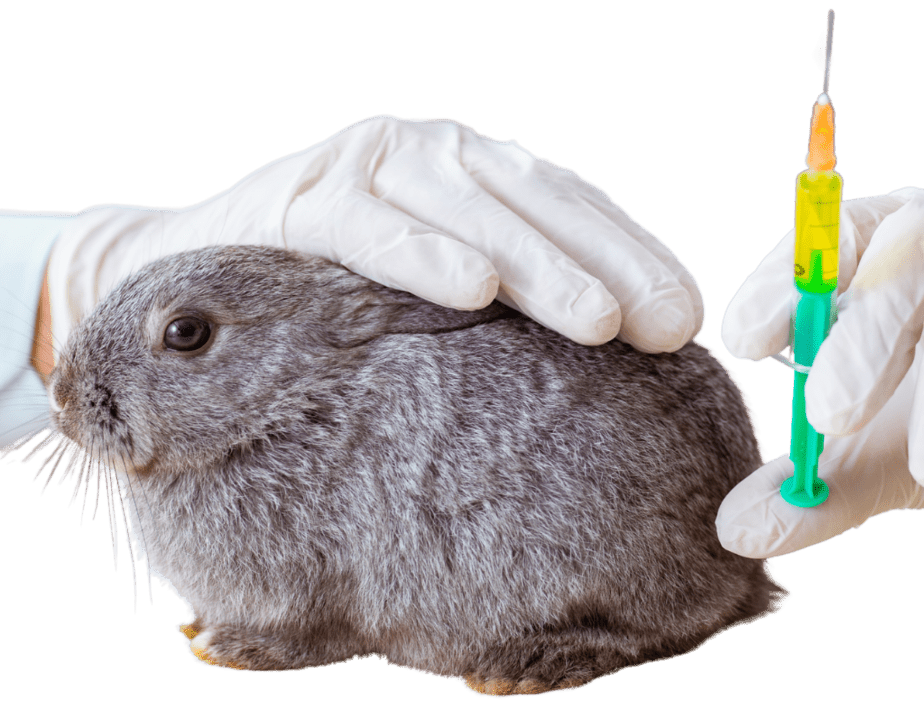
Calculator
Select a Drug to Calculate
Click on any drug from the table on the right to calculate the recommended dosage based on your rabbit's weight.
Medical Disclaimer: This calculator is for educational purposes only. Always consult with a qualified veterinarian before administering any medication to your rabbits. Dosages may vary based on individual health conditions.
Drug Reference Database
Click on any drug to calculate dosage. Data compiled from veterinary pharmacology references.
Analgesic & Anti-inflammatory
21 drugs| Drug Name | Dose Range | Route | Frequency | Notes |
|---|---|---|---|---|
|
Aspirin
|
100 mg/kg | PO | q12-24h | Analgesic, antipyretic, anti-inflammator... |
|
Buprenorphine
|
0.01-0.05 mg/kg | SC, IM, IV, TM | q6-12h | Analgesia, sedation |
|
Butorphanol
|
0.1-1 mg/kg | SC, IM, IV | q2-4h | Analgesia, sedation |
|
Carprofen
|
1-2 mg/kg | SC, PO | q12h | Anti-inflammatory, analgesia |
|
Carprofen
|
2-4 mg/kg | SC, PO | q24h | Anti-inflammatory, anti-endotoxic. Use w... |
|
Fentanyl
|
0.0074 mg/kg | IV | Single dose | - |
|
Fentanyl
CRI
|
30-100 µg/kg/min | CRI | Continuous | - |
|
Fentanyl
Transdermal
|
25 µg/rabbit | TD | For 3 days | - |
|
Flunixin
|
1.1 mg/kg | PO, SC, IM | q12h | Anti-inflammatory, analgesic, antipyreti... |
|
Gabapentin
|
3-10 mg/kg | PO | q8-12h | Analgesia, particularly in cases of neur... |
|
Ibuprofen
|
2-7.5 mg/kg | PO | q12-24h | Anti-inflammatory, analgesic |
|
Ketoprofen
|
1-3 mg/kg | SC, PO | q12-24h | Anti-inflammatory, analgesic |
|
Meloxicam
|
0.2-0.6 mg/kg | SC, PO | q12-24h | Anti-inflammatory, analgesic |
|
Meloxicam
|
1.5 mg/kg | PO | q24h for up to 5 days | Anti-inflammatory, analgesic. Higher dos... |
|
Meperidine
|
5-10 mg/kg | SC, IM | q2-3h | Analgesic, antipyretic, anti-inflammator... |
|
Methadone
|
0.7 mg/kg | IV | Single dose | - |
|
Methadone
|
0.3-0.6 mg/kg | IM | Single dose | Based on feline doses |
|
Morphine
|
2-5 mg/kg | SC, IM | q2-4h | Analgesic, antipyretic, anti-inflammator... |
|
Morphine
|
5-10 mg/kg | SC, IM | q2-4h | Analgesia. Short-term use only, hepatic... |
|
Paracetamol
|
200-500 mg/kg | PO | Single dose | Analgesic, antipyretic |
|
Tramadol
|
4.4-11 mg/kg | PO | q12h | Analgesia |
Antibiotics
23 drugs| Drug Name | Dose Range | Route | Frequency | Notes |
|---|---|---|---|---|
|
Amikacin
|
2-3 mg/kg | SC, IM | q8-12h | - |
|
Amoxicillin
|
7 mg/kg | SC | q24h | Injectable only. Not oral due to risk of... |
|
Azithromycin
|
15-30 mg/kg | PO | q24h | Although there are concerns regarding th... |
|
Cefalexin
|
20 mg/kg | SC | q24h | - |
|
Cefalexin
|
11-22 mg/kg | PO | q8h | - |
|
Chloramphenicol
|
30-50 mg/kg | PO | q12h | AUTHORIZED FOR USE IN RABBITS |
|
Ciprofloxacin
|
5-20 mg/kg | PO | q12h | - |
|
Doxycycline
|
2.5 mg/kg | PO | q12h | - |
|
Enrofloxacin
|
10-30 mg/kg | PO, SC, IM | q24h | - |
|
Enrofloxacin
|
20 mg/kg | PO, SC, IM | q24h | AUTHORIZED FOR USE IN RABBITS |
|
Florfenicol
|
25 mg/kg | IM, IV | q6h | Broad spectrum antibiotic |
|
Gentamicin
|
1.5-2.5 mg/kg | SC, IM, IV | q8h | Treatment of choice for enterotoxaemia |
|
Marbofloxacin
|
2-10 mg/kg | PO, IM, IV | q24h | - |
|
Metronidazole
|
20-40 mg/kg | PO | q12h | Treatment of choice for enterotoxaemia |
|
Oxytetracycline
|
30 mg/kg | SC | q72h | Treponematosis |
|
Oxytetracycline
|
15 mg/kg | SC | q24h | - |
|
Penicillin G
|
40000 IU/kg | SC, IM | q7days for 3 doses | Treponematosis |
|
Dihydrostreptomycin/Penicillin
|
40 mg/kg penicillin + 50 mg/kg streptomycin | SC | q24h | TEST DOSE of 5 mg/kg is advised first. D... |
|
Tilmicosin
|
10 mg/kg | SC | q24h for 3 days or q7days | - |
|
Tilmicosin
|
12.5 mg/kg | PO | q24h for 7 days | - |
|
Tilmicosin
|
25 mg/kg | SC | Once only | - |
|
Trimethoprim/sulfamethoxazole
|
40 mg/kg | PO | q12h | Coccidiosis |
|
Tylosin
|
10 mg/kg | PO, SC, IM | q12h | - |
Antiparasitic Agents
10 drugs| Drug Name | Dose Range | Route | Frequency | Notes |
|---|---|---|---|---|
|
Albendazole
|
15-20 mg/kg | PO | q24h for 2-4 weeks | - |
|
Cyromazine
|
6 % topical | Topical | Every 8-10 weeks | - |
|
Fenbendazole
|
20 mg/kg | PO | q24h for 9 or 28 days | - |
|
Imidacloprid
|
10 mg/kg | Topical | Single application | Fleas |
|
Ivermectin
|
0.4 mg/kg | PO, SC | q10-14 days × 2-3 doses | Ectoparasites |
|
Praziquantel
|
5-10 mg/kg | PO, IM, SC, Topical | Single dose | - |
|
Pyrethrin
|
250 mg/kg | TD | Single application | - |
|
Selamectin
|
6-18 mg/kg | Topical | Repeat after 4 weeks for Cheyletiella | - |
|
Sulfamethazine
|
100 mg/kg | PO | q24h | Coccidiosis |
|
Toltrazuril
|
2.5-5 mg/kg | PO | q24h for 2 days; repeat in 14 days | Coccidiosis |
Gastrointestinal System
12 drugs| Drug Name | Dose Range | Route | Frequency | Notes |
|---|---|---|---|---|
|
Bismuth subsalicylate
|
0.3-0.6 ml/kg | PO | q4-6h | Analgesic, spasmolytic. Do not use witho... |
|
Butylscopolamine/Metamizole
Buscopan
|
0.1 ml/kg | IV, IM | q12h | Spasmolytic. For gastrointestinal pain r... |
|
Cimetidine
|
5-10 mg/kg | PO | q6-12h | Gastric and intestinal prokinetic. Do no... |
|
Cisapride
|
0.5-1 mg/kg | PO | q8-24h | Gastric and intestinal prokinetic. Do no... |
|
Colestyramine
|
500 mg/kg | PO | q12h (2g per 20ml water for 14-21 days) | Treatment for antibiotic-induced enteroc... |
|
Dinoprost
|
0.2 mg/kg | IM, SC | Single injection | To assist in emptying impacted caeca, fo... |
|
Domperidone
|
0.5 mg/kg | PO | q12h | Gastric prokinetic. Alternative to metoc... |
|
Loperamide
|
0.04-0.2 mg/kg | PO | q8-12h | Gastric motility prokinetic. Do not use... |
|
Metoclopramide
|
0.2-0.5 mg/kg | PO, SC, IV | q4-8h | Gastric prokinetic, antiemetic |
|
Probiotics
|
0 per package | PO | Per package instructions | Transfaunation may be more effective tha... |
|
Ranitidine
|
2-5 mg/kg | PO | q8-12h | H2-receptor antagonist, reduces gastric... |
|
Simethicone
|
100 mg/kg | PO | q2-8h | For dispersal of gas in gastrointestinal... |
Central Nervous System
11 drugs| Drug Name | Dose Range | Route | Frequency | Notes |
|---|---|---|---|---|
|
Atropine
|
0.05 mg/kg | IM | Single dose | Organophosphate toxicity treatment. Appr... |
|
Cyclizine
|
8 mg/rabbit | PO | q12h | Torticollis |
|
Dexamethasone
|
0.2-0.6 mg/kg | SC, IV | Single dose | Cerebral injury. See text regarding cont... |
|
Diphenhydramine
|
2 mg/kg | PO, SC | q8-12h | Torticollis |
|
Furosemide
|
5-10 mg/kg | IM, IV | q12h | Cerebral oedema |
|
Glycopyrollate
|
0.1 mg/kg | SC, IM | Single dose | Organophosphate toxicity treatment |
|
Levetiracetam
|
20 mg/kg | PO | q8h | Torticollis |
|
Meclizine
|
2-12 mg/kg | PO | q24h | Torticollis |
|
Naloxone
|
0.01-1 mg/kg | IM, IV | Single dose | Opioid reversal |
|
Prednisolone
|
0.25-0.5 mg/kg | PO | q12h for 3 days, then q24h for 3 days, then q48h | See text regarding contraindications for... |
|
Prochlorperazine
|
0.25 mg/kg | PO | q8h | Torticollis |
Urogenital System
11 drugs| Drug Name | Dose Range | Route | Frequency | Notes |
|---|---|---|---|---|
|
Aglepristone
|
10 mg/kg | SC | q24h × 2, on days 6 and 7 after mating | Abortion |
|
Bendrofluazide
|
0.6 mg/kg | PO | q24h | Calcium-sparing diuretic, for use in inc... |
|
Bethanecol
|
2.5-5 mg/rabbit | PO | q12h | Atonic bladder |
|
Buserelin
|
0.2 ml/rabbit | SC | Single dose | Induces ovulation in breeding does. AUTH... |
|
Chorionic gonadotrophin
|
20-25 IU | IV | Single dose | Induces ovulation in breeding does |
|
Diethylstilbestrol
|
0.5 mg/rabbit | PO | 1-2 times weekly | Post-neutering urinary incontinence in d... |
|
Furosemide
|
0.3-2 mg/kg | IV, SC, IM | Single dose | Delayed parturition or agalactia. Confir... |
|
Furosemide
|
1-4 mg/kg | IM, SC, PO | q4-12h | - |
|
Oxytocin
|
2-12 IU/kg | IM, SC | Single dose | Delayed parturition or agalactia. Confir... |
|
Phenylpropanolamine
|
6.25-12.5 mg/rabbit | PO | q12h | Oestrogen-dependent urinary incontinence |
|
Proligestone
|
30 mg/kg | SC | Single dose | Pseudopregnancy. Owing to induced ovulat... |
Cardiorespiratory System
9 drugs| Drug Name | Dose Range | Route | Frequency | Notes |
|---|---|---|---|---|
|
Benazepril
|
0.25-0.5 mg/kg | PO | q24h | ACE inhibitor for cardiac disease |
|
Bromhexine
|
1 mg/kg | PO | q12-24h | Upper and lower respiratory hypersecreto... |
|
Digoxin
|
0.005-0.01 mg/kg | PO | q12-24h | Congestive heart failure, atrial fibrill... |
|
Diltiazem
|
0.5-1 mg/kg | PO | q12-24h | Calcium channel blocker for hypertrophic... |
|
Enalapril
|
0.1-0.5 mg/kg | PO | q24-48h | ACE inhibitor for cardiac disease |
|
Fluticasone
|
50-250 µg | Inhalation | q12-72h | Increases cardiac contractility in dilat... |
|
Furosemide
|
2-5 mg/kg | PO, SC, IM, IV | q12h PRN | Congestive heart failure |
|
Pimobendan
|
0.1-0.3 mg/kg | PO | q12-24h | Increases cardiac contractility in dilat... |
|
Terbutaline
|
1.25 mg/rabbit | PO | q8h | Bronchodilator |
Miscellaneous Agents
18 drugs| Drug Name | Dose Range | Route | Frequency | Notes |
|---|---|---|---|---|
|
Activated charcoal
|
1000 mg/kg | PO | q4-6h | Oral intoxication |
|
Aluminium hydroxide
|
30-60 mg/kg | PO | q8-12h | Phosphate binder |
|
Calcium gluconate
|
50-100 mg/kg | IP, IV | Single dose | Hypocalcaemia |
|
Chlorphenamine
|
0.2-0.4 mg/kg | PO | q12h | Sebaceous adenitis |
|
Chondroitin sulphate
|
0 per feline dose | PO | Per package instructions | Joint supplement. Use as per feline dose |
|
Ciclosporin
|
5 mg/kg | PO | q24h | Sebaceous adenitis |
|
Dexamethasone
|
0.5-2 mg/kg | IM, IV, SC | Single dose | Shock doses for enterotoxaemia |
|
Edetate calcium disodium
|
27.5 mg/kg | SC | q6h for 5 days, repeat as necessary 1 week later | Heavy metal (lead, zinc) toxicity |
|
Erythropoietin
|
50-150 IU/kg | SC | q2-3 days | Non-regenerative anaemia |
|
Ferrous sulphate
|
4-6 mg/kg | PO | q24h | Appetite stimulant |
|
Heparin
|
5 mg/kg | IV | Single dose | Anticoagulant |
|
Hydroxyzine
|
2 mg/kg | PO | q8-12h | Antihistamine |
|
Mirtazapine
|
0.3-0.5 mg/kg | PO | q24h | Appetite stimulant |
|
Nandrolone
|
2 mg/kg | SC, IM | Single dose | Anabolic steroid, appetite stimulant |
|
Penicillamine
|
30 mg/kg | PO | q12h | Chelating agent for copper and lead toxi... |
|
Polysulphated glycosaminoglycan
|
2.2 mg/kg | SC, IM | q3 days for 21-28 days, then q14 days | Prevention of postoperative adhesions |
|
Verapamil
|
0.2 mg/kg | IP | q8h for 9 doses | Prevention of postoperative adhesions |
|
Vitamin K
|
1-10 mg/kg | IM | Single dose | Coagulopathy, rodenticide toxicity |
Ophthalmic Agents (Topical)
8 drugs| Drug Name | Dose Range | Route | Frequency | Notes |
|---|---|---|---|---|
|
Betaxolol
|
0 Topical | Topical (eye) | q12h | Glaucoma |
|
Chloramphenicol
|
0 Topical | Topical (eye) | As directed | Increases tear production |
|
Ciclosporin A
|
0 Topical | Topical (eye) | q12h | Keratoconjunctivitis sicca |
|
Ciprofloxacin
|
0 Topical | Topical (eye) | q8-12h | Conjunctivitis |
|
Dichlorphenamide
|
1-2 mg/kg | PO | q24h | Glaucoma |
|
Dorzolamide
|
0 Topical | Topical (eye) | q8-24h | Glaucoma |
|
Fusidic acid
|
0 Topical | Topical (eye) | q12-24h | Conjunctivitis. Authorized for rabbits (... |
|
Gentamicin
|
1-2 drops | Topical (eye) | q8h for 5-7 days | Conjunctivitis. Authorized for rabbits (... |
Topical Agents
3 drugs| Drug Name | Dose Range | Route | Frequency | Notes |
|---|---|---|---|---|
|
Lidocaine, prilocaine
|
0 Topical application | Topical | As needed | Full-thickness local anaesthesia (EMLA c... |
|
Fusidic acid
|
0 Apply | Topical | q24h for 2-3 days | With or without betamethasone, for topic... |
|
Silver sulfadiazine
|
0 Apply topically | Topical | q24h | Good Gram-negative activity including Ps... |
Route Abbreviations
- PO - Oral (by mouth)
- SC - Subcutaneous (under the skin)
- IM - Intramuscular
- IV - Intravenous
- TM - Transmucosal (buccal)
- IN - Intranasal
- IT - Intratracheal
- Topical - Applied to skin
Frequency Abbreviations
- q4h - Every 4 hours
- q6h - Every 6 hours
- q8h - Every 8 hours
- q12h - Every 12 hours
- q24h - Every 24 hours (once daily)
- PRN - As needed
- CRI - Constant rate infusion
Rabbit Medication Guide
This rabbit drug dosage calculator covers 126+ veterinary medications across 10 categories. Below you will find practical guidance on calculating dosages, understanding drug routes, safety warnings, and tips from experienced breeders. All drug data is sourced from Harcourt-Brown (2002), Carpenter's Exotic Animal Formulary, Varga (2014), and other peer-reviewed veterinary references.
How to Calculate Rabbit Drug Dosages
Getting the dose wrong can lead to underdosing (ineffective treatment) or overdosing (toxicity). Here is the four-step process our calculator automates:
- Weigh your rabbit accurately. Use a digital kitchen scale for small breeds or a baby scale for larger breeds. Weigh in kilograms for direct compatibility with veterinary dosing charts. If you weigh in pounds, multiply by 0.45 to convert.
- Find the prescribed drug's dose range. Veterinary references list doses as mg/kg (milligrams per kilogram of body weight). Most drugs have a range, for example Meloxicam at 0.2-0.6 mg/kg. The calculator uses the midpoint.
- Calculate the total dose. Multiply the dose rate (mg/kg) by your rabbit's weight in kg. For a 2 kg rabbit at 0.4 mg/kg Meloxicam, the total dose is 0.8 mg.
- Calculate the volume to administer. Divide the total dose by the drug's concentration. If your Meloxicam is 1.5 mg/mL, then 0.8 mg divided by 1.5 mg/mL equals 0.53 mL.
Common Rabbit Medications Quick Reference
Rabbits have unique pharmacology. Many drugs safe for dogs and cats are dangerous or fatal to rabbits, particularly oral penicillin-based antibiotics. Below are the most commonly used medications based on what we use in our rabbitry and what veterinary literature supports.
Pain Relief
Pain management is critical because rabbits hide pain as a prey species survival instinct. By the time you notice teeth grinding or hunched posture, the pain is already significant. Untreated pain leads to GI stasis and rapid decline.
| Drug | Dose Range | Route | Best For |
|---|---|---|---|
| Meloxicam | 0.2-0.6 mg/kg | SC, PO | Post-surgical pain, arthritis, inflammation |
| Buprenorphine | 0.01-0.05 mg/kg | SC, IM, IV, TM | Moderate to severe pain, post-operative |
| Gabapentin | 3-10 mg/kg | PO | Nerve pain, chronic pain, pre-anesthetic sedation |
| Tramadol | 4.4-11 mg/kg | PO | Moderate pain when injection is not feasible |
Rabbit-Safe Antibiotics
Oral penicillins, amoxicillin, lincomycin, and clindamycin can cause fatal enterotoxemia by destroying cecal bacteria and allowing Clostridium overgrowth. These antibiotics are considered safe at correct doses:
| Drug | Dose Range | Route | Common Use |
|---|---|---|---|
| Enrofloxacin | 10-30 mg/kg | PO, SC, IM | Respiratory and urinary infections |
| Trimethoprim/Sulfa | 40 mg/kg | PO | Coccidiosis, urinary tract infections |
| Chloramphenicol | 30-50 mg/kg | PO | Broad-spectrum, authorized for rabbits |
| Metronidazole | 20-40 mg/kg | PO | Enterotoxemia, anaerobic infections |
GI Medications
Gastrointestinal stasis is the most common emergency in rabbits. If your rabbit stops pooping, these medications help restore gut motility. Never use prokinetics if intestinal obstruction has not been ruled out.
| Drug | Dose Range | Route | Purpose |
|---|---|---|---|
| Cisapride | 0.5-1.0 mg/kg | PO | GI prokinetic, restores motility |
| Metoclopramide | 0.2-0.5 mg/kg | PO, SC, IV | Gastric prokinetic, antiemetic |
| Ranitidine | 2-5 mg/kg | PO | Reduces gastric acid, prokinetic effects |
| Simethicone | 100 mg/kg | PO | Gas dispersal for bloating relief |
Understanding Drug Administration Routes
The route of administration affects how quickly a drug works and how much reaches the bloodstream. Choosing the wrong route can reduce effectiveness or cause tissue damage.
Oral (PO)
Most common for home treatment. Use a 1 mL syringe placed into the diastema (the gap between incisors and molars). Dispense slowly, 0.2 mL at a time to prevent aspiration. Rabbits cannot vomit, so oral medications stay down once swallowed. Absorption is slower than injectable routes but suitable for long-term treatments.
Subcutaneous (SC)
Injected under the skin in the scruff between the shoulder blades. Absorption takes 15 to 30 minutes. This is the most common injectable route for owners trained by their vet. SC fluids are critical for dehydrated rabbits and GI stasis cases. We administer SC fluids regularly in our rabbitry.
Intramuscular (IM)
Injected into the quadriceps or lumbar muscles. Faster absorption than SC. Rabbits have limited muscle mass, so injection volumes must be under 0.5 mL per site. More painful than SC and reserved for situations where rapid absorption is needed.
Transmucosal (TM)
Applied to the gum tissue where it absorbs directly into the bloodstream. Buprenorphine is commonly given this way because it has excellent transmucosal absorption, avoiding the risk of the rabbit spitting out medication.
Drug Safety Warnings for Rabbits
Rabbits are not small cats or dogs. Their hindgut-fermenting digestive system makes them uniquely vulnerable to certain drug classes. Here are the critical safety issues every rabbit owner and breeder must understand.
Oral penicillins (amoxicillin, ampicillin), lincosamides (lincomycin, clindamycin), and oral cephalosporins destroy cecal microflora, allowing Clostridium spiroforme overgrowth that produces fatal iota toxin. Death can occur within 48 to 72 hours of a single dose. Our calculator flags these drugs with warning icons. Injectable forms sometimes bypass the gut and can be used safely, but only under direct veterinary supervision.
Meloxicam and Carprofen are commonly used for pain, but they carry renal and GI risks. Never use NSAIDs in dehydrated rabbits. Carprofen at higher doses (2-4 mg/kg) should be limited to 3 days maximum. Flunixin carries higher GI risk than Meloxicam and is reserved for severe, short-term pain.
Approximately 40% of domestic rabbits produce atropinesterase, an enzyme that rapidly breaks down atropine. Atropine-based pre-anesthetic protocols may be completely ineffective. Glycopyrrolate is the recommended alternative. There is no simple test to determine which rabbits produce this enzyme, so many vets use Glycopyrrolate by default.
Practical Medication Tips for Breeders
Medicine Cabinet Essentials
Keep these on hand for emergencies: Meloxicam (pain/inflammation), Simethicone infant drops (gas), critical care feeding formula, subcutaneous fluids (lactated Ringer's with administration sets), and a broad-spectrum antibiotic prescribed by your vet. Check expiration dates monthly.
Accurate Weighing Is Not Optional
A 500-gram error in a 2 kg rabbit changes the dose by 25%. For drugs like Gentamicin or Amikacin, this could mean the difference between treatment and toxic overdose. Use a digital kitchen scale for dwarf breeds and a baby scale for larger breeds. Weigh before every dose adjustment, not just at treatment start.
Compounding for Tiny Patients
A 1 kg rabbit needing Buprenorphine at 0.03 mg/kg from a 0.3 mg/mL solution requires just 0.1 mL. Use 1 mL insulin syringes for accuracy at these volumes. Ask your vet about compounding pharmacies that prepare more dilute formulations for easier dosing of small rabbits and kits.
Frequently Asked Questions
Can I give my rabbit human medications?
Some human medications are safe for rabbits at specific doses, including Meloxicam, Simethicone, Ranitidine, and Gabapentin. However, concentrations and inactive ingredients in human formulations may differ. Never give a rabbit any medication without veterinary guidance on the exact product and dose.
How do I convert my rabbit's weight from pounds to kilograms?
Multiply the weight in pounds by 0.45 to get kilograms. For example, a 5-pound rabbit weighs approximately 2.25 kg. Our calculator handles this conversion automatically when you select "lb" as the weight unit.
Why are some antibiotics dangerous for rabbits?
Rabbits are hindgut fermenters with a delicate cecal microbiome. Oral penicillins, amoxicillin, and lincosamides destroy beneficial gut bacteria, allowing Clostridium overgrowth that produces fatal toxins. Injectable forms sometimes bypass the gut and can be used safely under veterinary supervision.
What is the most commonly prescribed pain medication for rabbits?
Meloxicam is the most widely used analgesic for rabbits. It is effective for post-surgical pain, arthritis, and general inflammation at 0.2-0.6 mg/kg given orally or subcutaneously every 12-24 hours. It has a good safety profile when used in well-hydrated rabbits.
How do I give oral medication to a rabbit that resists?
Use a small syringe (1 mL) placed into the diastema, the gap between the incisors and molars on the side of the mouth. Dispense slowly in 0.2 mL increments to prevent aspiration. Mixing medications with a small amount of unsweetened banana baby food can improve acceptance.
What should I keep in a rabbit emergency medicine kit?
Essential items include Simethicone for gas, critical care feeding formula, subcutaneous fluids (lactated Ringer's), 1 mL syringes, a digital scale, and a vet-prescribed pain medication like Meloxicam. Keep your rabbit-savvy vet's emergency number posted prominently.
Does drug concentration affect the dose I need to give?
Drug concentration does not change the dose (amount of active ingredient) but determines the volume you administer. A higher concentration means a smaller volume for the same dose. Always enter the concentration from your specific product's label into the calculator to get the correct volume.