Do Male Rabbits Have Nipples?
Yes, male rabbits have nipples, just like females. Both sexes develop nipples during embryonic growth before sex differentiation occurs, which means every rabbit is born with them regardless of gender. The key difference is size: a male rabbit's nipples are significantly smaller and underdeveloped compared to a female's, making them much harder to spot beneath thick fur. Most rabbit owners never notice them at all, which leads to the common misconception that only does (female rabbits) have nipples.
As breeders, we often get asked this question by new rabbit owners who are trying to determine the sex of their rabbit. While nipple size can occasionally offer a clue, it is not a reliable method for sexing rabbits. In this guide, we will cover everything you need to know about male rabbit nipples, including how to find them, what they should look like, when to worry, and how nipple anatomy fits into rabbit biology overall.
Why Do Male Rabbits Have Nipples?
The answer comes down to embryonic development. In mammals, including rabbits, nipples begin forming very early in the womb, before the embryo's sex hormones kick in and direct development toward male or female characteristics. By the time testosterone starts influencing a male rabbit's growth, the nipple tissue has already been laid down.
This is the same reason human males have nipples. It is a shared trait across nearly all mammals. The genetic blueprint for nipples exists on non-sex chromosomes, so both males and females carry and express these genes during early development.
The Role of Hormones in Nipple Development
Once sex hormones activate, female rabbits (does) experience further mammary gland development driven by estrogen and progesterone. These hormones cause the nipples to enlarge and the underlying mammary tissue to develop, preparing the doe for potential nursing.
Male rabbits (bucks) produce testosterone instead, which suppresses mammary development. The result is that bucks retain their nipples but in a rudimentary, underdeveloped state. The nipples remain small, flat, and functionally inactive throughout the buck's life under normal circumstances.
Is This Normal Across All Rabbit Breeds?
Yes, every rabbit breed has nipples on both males and females. Whether you own a Netherland Dwarf, a Flemish Giant, a Holland Lop, or a New Zealand White, the bucks will all have nipples. The number and exact size may vary slightly by breed, but the presence of nipples in males is universal across all domestic and wild rabbit species.
How Many Nipples Do Male Rabbits Have?
Male rabbits have the same number of nipples as females of the same breed. The typical nipple count for rabbits ranges from 8 to 10, arranged in two parallel rows along the belly. Some breeds may have as few as 6 nipples, while larger breeds can occasionally have up to 12.
| Breed Size | Typical Nipple Count | Examples |
|---|---|---|
| Small breeds (under 4 lbs) | 6 to 8 | Netherland Dwarf, Polish, Mini Rex |
| Medium breeds (4 to 9 lbs) | 8 to 10 | Holland Lop, Dutch, Rex, Mini Lop |
| Large breeds (9+ lbs) | 8 to 12 | Flemish Giant, New Zealand, Californian |
The number of nipples is determined by genetics, not by sex. A buck from a line of does that consistently produces 10 nipples will also have 10 nipples himself. This is worth keeping in mind if you are a breeder selecting for larger litter capacity, since bucks carry and pass on the genes for nipple count even though they never use them for nursing.
How to Find Your Male Rabbit's Nipples
Locating a buck's nipples can be surprisingly difficult, especially on breeds with dense or long fur like Angoras, Lionheads, or Rex rabbits. Here is a step-by-step method that works reliably:
- Place your rabbit on a stable surface. A non-slip mat on a table works well. Make sure your rabbit feels secure and is not struggling.
- Gently turn your rabbit over or tilt them back slightly. Support their back and hindquarters. Never hold a rabbit upside down by force, as this can cause injury or extreme stress.
- Part the fur along the belly. Use your fingers to separate the fur in rows, starting from the chest area and working toward the hindquarters. The nipples are arranged in two parallel lines running along the underside.
- Look for small, raised bumps. Male rabbit nipples resemble tiny skin tags. They are usually lighter in color than the surrounding skin, often pale pink or flesh-toned.
- Try gently blowing on the fur. If your rabbit has especially thick fur and you cannot part it easily, a gentle puff of air can temporarily separate the hairs and reveal the nipple underneath.
If your rabbit becomes stressed during the examination, stop and try again later. You can also ask your veterinarian to show you during a routine checkup. There is no medical reason you need to locate the nipples unless you suspect a health problem.
What Do Male Rabbit Nipples Look Like?
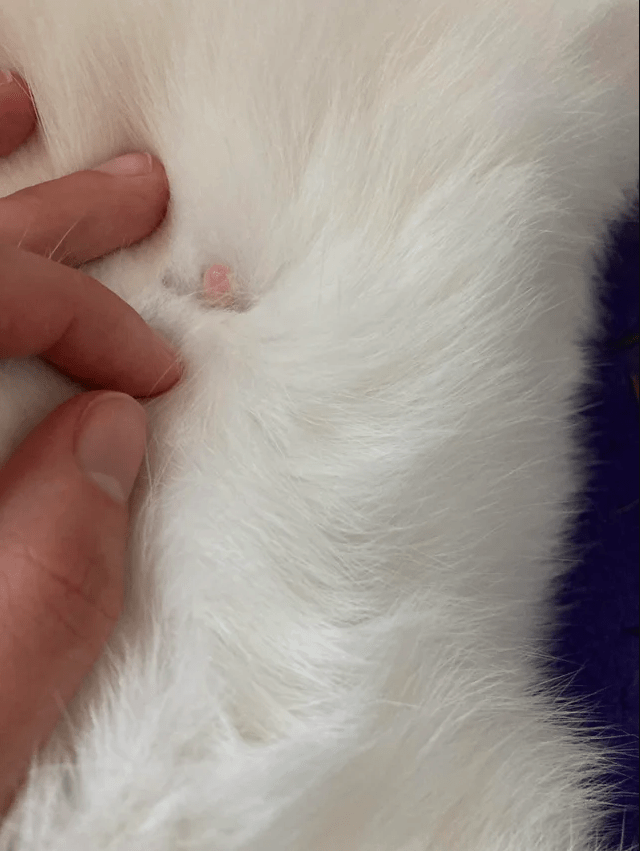
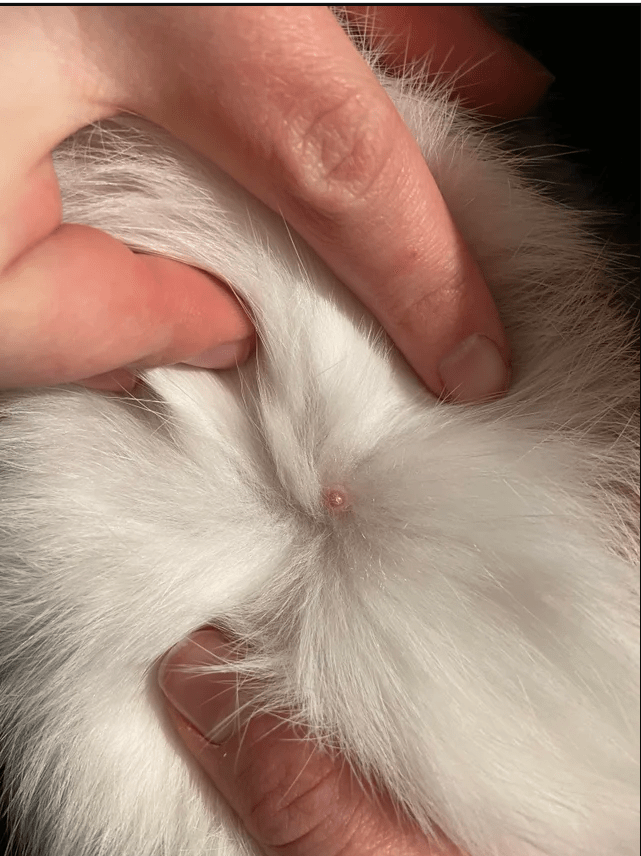
A healthy male rabbit's nipple looks like a very small, slightly raised bump, similar in appearance to a skin tag. The color is typically light pink or flesh-toned, blending in with the surrounding skin. They are usually 1 to 3 millimeters in diameter on an adult buck.
Here are examples of what rabbit nipples look like:
u/Estate_Soggy
Compare these to what you feel on your buck. Female nipples (shown in the first image) are noticeably larger and more prominent, especially on does that have nursed litters before. Male nipples stay small and flat throughout life.
Male vs. Female Rabbit Nipples: Key Differences
While both sexes have nipples, there are several important differences that breeders and owners should understand:
| Feature | Male (Buck) | Female (Doe) |
|---|---|---|
| Size | 1 to 3 mm, very small | 3 to 8 mm, larger and more prominent |
| Visibility | Hard to find under fur | Easier to spot, especially after pregnancy |
| Color | Pale pink, flesh-toned | Pink to darker pink, may darken during pregnancy |
| Mammary tissue | Rudimentary, non-functional | Fully developed, produces milk when nursing |
| Changes over time | Stays the same size | Enlarges during pregnancy and nursing |
| Texture | Flat, skin-tag-like | Slightly raised, softer tissue |
One common mistake new owners make is using nipple size to determine whether their rabbit is male or female. While a rabbit with visibly enlarged nipples is almost certainly female, small nipples do not confirm the rabbit is male. Young does who have never been bred also have relatively small nipples. The only reliable way to sex a rabbit is by examining the genital area.
Can You Use Nipples to Determine a Rabbit's Sex?
Nipple size is not a reliable way to sex a rabbit, especially in young animals. Before sexual maturity (around 3 to 6 months depending on breed), both males and females have very small, similar-looking nipples. Even in adult rabbits, a doe that has never been pregnant may have nipples that look nearly identical to a buck's.
The reliable method for sexing rabbits involves gently pressing on the genital area to expose the genitalia. In males, the penis will protrude as a small tube. In females, you will see a slit-like opening (vulva). If you are not comfortable doing this yourself, a veterinarian or experienced breeder can help.
When Might Nipple Size Help?
There is one scenario where nipple examination can assist with sexing: if you have an adult doe who has previously nursed a litter, her nipples will be noticeably larger and more prominent than a buck's. In breeding operations, experienced mothers develop prominent mammary tissue that is very easy to distinguish from a male's flat, rudimentary nipples.
However, this only works retrospectively. You are essentially confirming the rabbit is female because she has clearly nursed before, not using the nipples as a primary identification method.
Health Concerns Related to Male Rabbit Nipples
While male rabbit nipples are normally harmless and inactive, there are a few health conditions that can affect them. Knowing what to watch for helps you catch problems early.
Gynecomastia in Male Rabbits
Gynecomastia is the abnormal enlargement of mammary tissue in males. In rabbits, this condition has been documented in association with testicular interstitial cell tumors. These tumors produce excess estrogen, which stimulates the mammary glands and causes swelling around the nipples.
Signs of gynecomastia in bucks include:
- Visibly swollen or enlarged nipples
- Soft, puffy tissue around the nipple area
- Nipples that are warm to the touch
- Changes in the size or shape of one or both testicles
- Behavioral changes, including reduced mating drive
If you notice any of these signs, take your rabbit to a veterinarian experienced with exotic animals as soon as possible. Early detection of testicular tumors significantly improves outcomes.
Mastitis
While mastitis (infection of the mammary glands) is far more common in nursing does, it can theoretically occur in bucks if bacteria enter through a damaged or irritated nipple. This is extremely rare but worth mentioning.
Signs include redness, swelling, warmth, and discharge from the nipple. If you see any of these symptoms, consult your vet immediately.
Skin Irritation and Abscesses
Sometimes what appears to be a nipple problem is actually a skin issue near the nipple area. Rabbits can develop abscesses, cysts, or irritated patches on their belly from rough cage flooring, dirty bedding, or scratching. If you notice a bump near a nipple that looks inflamed, red, or is leaking fluid, it may be an abscess rather than a nipple issue.
Keeping your rabbit's living area clean and using appropriate bedding helps prevent skin problems in the nipple region and across the belly.
Do Male Rabbits Ever Produce Milk?
Under normal circumstances, no. Male rabbits do not produce milk. Their mammary glands are rudimentary and lack the developed tissue needed for lactation. Milk production requires the hormonal cascade triggered by pregnancy and birth, specifically high levels of prolactin, which bucks do not produce in significant quantities.
However, in extremely rare cases involving hormone-producing tumors (as discussed in the gynecomastia section above), a buck's mammary glands could theoretically be stimulated enough to produce a small amount of fluid. This would be a sign of a serious medical condition, not a normal occurrence, and requires immediate veterinary attention.
Nipple Count and Breeding: What Breeders Should Know
For rabbit breeders, understanding nipple biology matters because it connects to litter management. A doe's nipple count determines how many kits she can nurse effectively at one time. Does with 8 nipples can comfortably nurse 8 kits, while does with 10 nipples have capacity for larger litters.
Here is the important part for breeders: bucks carry the genes for nipple count too. If you are breeding for larger litter capacity, selecting bucks from lines where the does consistently have 10 nipples can increase the likelihood of producing daughters with higher nipple counts. You can verify a buck's nipple count by locating them using the method described earlier in this article.
When caring for newborn kits, keeping track of the doe's nipple count relative to litter size helps you decide whether foster nursing or supplemental feeding is needed. If a doe has 8 nipples but delivers 12 kits, some kits will not get adequate milk without intervention.
Common Myths About Male Rabbit Nipples
Myth 1: Only Female Rabbits Have Nipples
This is false. As covered throughout this article, all rabbits have nipples regardless of sex. The confusion arises because male nipples are so small they often go unnoticed.
Myth 2: You Can Reliably Sex a Rabbit by Checking Nipples
Also false. While enlarged nipples suggest a female who has nursed, small nipples do not confirm a male. Always check the genital area for reliable sexing.
Myth 3: Swollen Nipples on a Male Rabbit Are Normal
Swollen or enlarged nipples on a buck are not normal and could indicate gynecomastia or another health issue. A veterinary exam is warranted whenever a buck's nipples appear enlarged.
Myth 4: Male Rabbits Have Fewer Nipples Than Females
The number of nipples is identical between males and females of the same breed. The only difference is size and development, not quantity.
Frequently Asked Questions
Do all male rabbits have nipples?
Yes, every male rabbit has nipples. Nipple development occurs early in embryonic growth before sex hormones influence development, so both bucks and does are born with the same number of nipples regardless of breed or size.
Can you tell if a rabbit is male or female by its nipples?
Nipple size alone is not a reliable way to sex rabbits. Young does and bucks have similar-looking nipples. The only accurate method is examining the genital area. Does that have previously nursed will have larger nipples, but this only works for confirming sex after breeding.
Should I be worried if my male rabbit's nipple looks swollen?
Yes, swollen nipples on a male rabbit can indicate gynecomastia, which is sometimes linked to testicular tumors. If you notice enlarged, red, or warm nipples on your buck, schedule a veterinary exam promptly. Early detection improves treatment outcomes significantly.
How many nipples does a rabbit have?
Most rabbits have 8 to 10 nipples arranged in two rows along the belly. Small breeds may have as few as 6, while large breeds can have up to 12. Both males and females of the same breed have the same count.
Do male rabbits produce milk?
No, male rabbits do not produce milk under normal circumstances. Their mammary glands are underdeveloped and lack the hormonal signals needed for lactation. If a buck's nipples produce any discharge, this is abnormal and requires veterinary evaluation.
Cite this article:
Cite this article:
BunnySync (March 16, 2026) Do Male Rabbits Have Nipples? Complete Anatomy Guide. Retrieved from https://bunnysync.com/blog/do-male-rabbits-have-nipples.
"Do Male Rabbits Have Nipples? Complete Anatomy Guide." BunnySync - March 16, 2026, https://bunnysync.com/blog/do-male-rabbits-have-nipples