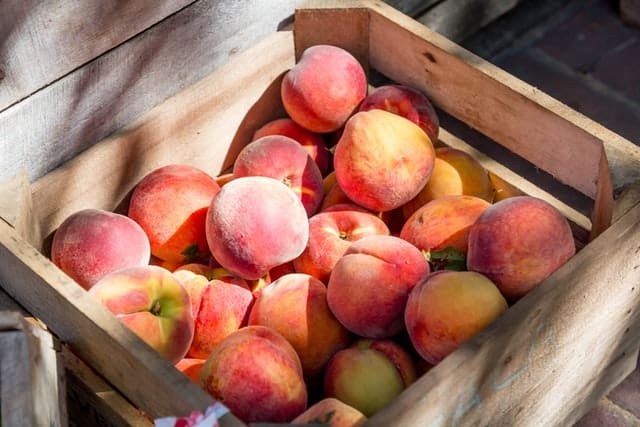
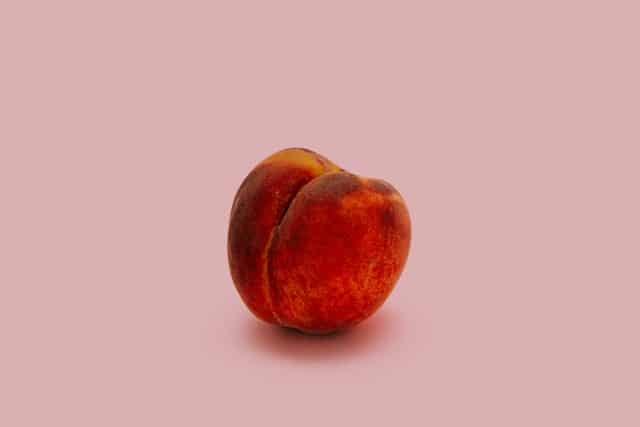
Yes, rabbits can eat peaches safely, but only in small amounts and with the pit removed. As a breeder who has raised dozens of litters over the years, I regularly offer fresh peach slices as a summer treat. The flesh and skin are both fine for adult rabbits over 12 weeks old, but the pit, leaves, and branches contain amygdalin, which breaks down into cyanide and is toxic. Stick to 1 to 2 teaspoons of diced peach flesh per 2 pounds of body weight, no more than twice a week. If you are wondering whether can rabbits eat peaches without any issues, the answer is yes, as long as you follow proper portion sizes and keep hay as the foundation of their diet.
Peaches fall into the same stone fruit family as nectarines and plums, so many of the same rules apply. If you have already looked into whether rabbits can eat nectarines, you will find the guidelines are nearly identical. The key difference is that peaches have a slightly fuzzier skin, which some rabbits enjoy and others ignore.
Are Peaches Safe for Rabbits?
Peaches are safe for rabbits when served correctly. The flesh is soft, hydrating, and easy for rabbits to chew. The natural sugars in peaches are not inherently dangerous, but they do need to be limited because a rabbit's digestive system is built to process high-fiber foods like hay, not sugary fruits.
The real danger with peaches comes from the pit. Peach pits contain amygdalin, a compound that releases hydrogen cyanide when crushed or digested. Even a small amount of cyanide can be fatal to a rabbit due to their small body size. Always remove the pit completely before offering any peach to your rabbit.
According to the VCA Animal Hospitals feeding guide, fruits should make up no more than 5% of a rabbit's total daily diet. Peaches fit within this allowance as an occasional treat, not a dietary staple. The bulk of your rabbit's nutrition should come from unlimited timothy hay, fresh leafy greens, and proper pellet portions for rabbits.
One thing I have learned from years of breeding is that every rabbit reacts differently to new foods. Some of my does love peach slices while others show zero interest. That is completely normal. Never force a rabbit to eat something it does not want.
What Parts of a Peach Can Rabbits Eat?
Not every part of a peach is safe for your rabbit. Here is a breakdown of what you can and cannot offer.
Peach Flesh
The soft, juicy flesh of a ripe peach is the safest part for rabbits. It contains natural sugars, water, vitamins, and minerals that provide a small nutritional boost alongside their regular diet. Cut the flesh into small, bite-sized pieces (roughly 1 centimeter cubes) to prevent choking.
I always use ripe peaches rather than unripe ones. Unripe peaches are harder, more acidic, and less palatable. A ripe peach that gives slightly when pressed is ideal.
Peach Skin
Yes, rabbits can eat peach skin. The skin actually contains more fiber than the flesh, making it a slightly better option from a nutritional standpoint. However, you need to wash the peach thoroughly before serving it. Commercially grown peaches are often treated with pesticides that can be harmful to rabbits.
I recommend buying organic peaches when possible. If organic is not available, soak the peach in a water and vinegar solution (3 parts water to 1 part white vinegar) for 10 minutes, then rinse well. This removes most surface pesticide residues.
Parts You Must Avoid
Several parts of the peach plant are toxic to rabbits and must never be fed under any circumstances:
- Peach pit (stone): Contains amygdalin, which converts to cyanide during digestion. Even small fragments can be dangerous.
- Peach leaves: Also contain amygdalin. Fresh or wilted leaves are both toxic.
- Peach branches and twigs: Unlike apple branches which are safe for chewing, peach wood contains cyanogenic glycosides and should never be given to rabbits.
- Peach blossoms: These also contain trace amounts of cyanide compounds and should be avoided.
If you have peach trees in your yard and your rabbits have outdoor time, make sure they cannot access fallen branches, leaves, or pits. I lost a young kit early in my breeding career because it chewed on a peach branch that had fallen into the exercise area. It is a mistake you only make once.
How Much Peach Can a Rabbit Eat?
Portion control is critical when feeding peaches to rabbits. The sugar content (approximately 8.4 grams per 100 grams of flesh) means overfeeding can quickly lead to digestive problems. Here is a practical serving guide based on breed size:
| Breed Size | Example Breeds | Body Weight | Peach Serving Size | Frequency |
|---|---|---|---|---|
| Small breeds | Netherland Dwarf, Holland Lop, Mini Rex | 1 to 4 lbs (0.5 to 1.8 kg) | 1 teaspoon (about 5 grams) | 1 to 2 times per week |
| Medium breeds | Dutch, Rex, English Angora | 4 to 8 lbs (1.8 to 3.6 kg) | 1 tablespoon (about 15 grams) | 1 to 2 times per week |
| Large breeds | New Zealand, Californian, Satin | 8 to 12 lbs (3.6 to 5.4 kg) | 2 tablespoons (about 30 grams) | 1 to 2 times per week |
| Giant breeds | Flemish Giant, Continental Giant | 12+ lbs (5.4+ kg) | 2 to 3 tablespoons (30 to 45 grams) | 1 to 2 times per week |
A general rule I follow in my rabbitry is 1 to 2 teaspoons of fruit per 2 pounds of body weight, offered no more than twice a week. On days when I give peach, I skip other sugary treats. Variety matters, so I rotate between peaches, berries, and other safe fruits throughout the week rather than giving the same treat repeatedly.
Keep in mind that these portions refer to peach as the only fruit treat for that serving. If you are also offering other fruits like berries or apple slices in the same sitting, reduce the peach portion accordingly. Total fruit intake should not exceed 1 to 2 tablespoons per 5 pounds of body weight per day.
What Are the Nutritional Benefits of Peaches for Rabbits?
Peaches are not a nutritional powerhouse for rabbits, but they do provide some beneficial vitamins and minerals in small amounts. The real value of peaches is as an enrichment treat that adds variety and mental stimulation to your rabbit's routine. Here is what 100 grams of raw peach contains:
| Nutrient | Amount per 100g | Benefit for Rabbits |
|---|---|---|
| Calories | 39 kcal | Low-calorie treat option |
| Water | 89.2 g | Helps with hydration |
| Sugar | 8.4 g | Provides quick energy (limit intake) |
| Fiber | 1.5 g | Small digestive benefit |
| Vitamin A | 326 IU | Supports eye and immune health |
| Vitamin C | 6.6 mg | Antioxidant support (rabbits produce their own) |
| Vitamin E | 0.73 mg | Supports reproductive health |
| Potassium | 190 mg | Supports muscle and nerve function |
| Niacin (B3) | 0.81 mg | Supports metabolism |
| Choline | 6.1 mg | Supports liver function |
The high water content (nearly 89%) makes peaches a refreshing treat during hot summer months. I have found that offering a chilled (not frozen) peach slice on particularly hot days helps encourage my rabbits to stay hydrated. The vitamin A content is modest but contributes to healthy eyesight and immune function.
That said, peaches should never replace the nutrients your rabbit gets from hay, leafy greens, and pellets. To understand how much hay your rabbit needs daily, remember that hay should make up 80% or more of their diet. Peaches and other treats are simply a bonus.
What Happens If a Rabbit Eats Too Many Peaches?
Overfeeding peaches can cause several health problems. I have seen these issues firsthand in rabbits whose owners were too generous with fruit treats.
Gastrointestinal stasis (GI stasis): This is the most serious risk. When a rabbit fills up on sugary fruit instead of fiber-rich hay, the gut slows down or stops completely. GI stasis can be fatal within 24 to 48 hours if not treated. Signs include refusal to eat, reduced or absent droppings, a hunched posture, and teeth grinding from pain.
Diarrhea and soft cecotrophs: Excess sugar disrupts the delicate balance of bacteria in the rabbit's cecum. This leads to soft, mushy cecotrophs (the nutrient-rich droppings rabbits normally re-ingest) or outright diarrhea. True diarrhea in rabbits is a veterinary emergency, especially in young kits.
Obesity: Rabbits that regularly eat too much fruit gain weight quickly. An obese rabbit cannot reach its cecotrophs for re-ingestion, leading to a condition commonly called "poopy butt." Obesity also puts strain on the joints, heart, and liver. According to published veterinary research on rabbit digestive disorders, obesity is a contributing factor in numerous secondary health conditions.
Dental problems: Sugar promotes bacterial growth in the mouth, which can contribute to dental disease over time. Rabbits need abrasive foods like hay to grind down their continuously growing teeth. If a rabbit chooses sweet peach over hay, tooth overgrowth becomes a real concern.
Selective feeding behavior: This is the issue I see most often. Once a rabbit develops a taste for sweet treats, it may refuse hay and pellets in favor of fruit. Breaking this habit is difficult. Prevention is far easier than correction, so always keep portions small and infrequent.
How to Safely Introduce Peaches to Your Rabbit
If your rabbit has never eaten peach before, follow these steps to introduce it safely:
- Confirm your rabbit's age. Only offer peaches to rabbits that are at least 12 weeks old. Younger kits have sensitive, developing digestive systems that cannot handle sugary foods. I personally wait until my rabbits are 4 to 5 months old before introducing any fruit treats.
- Choose a ripe, organic peach. Select a peach that is ripe (slightly soft when pressed) and free of mold, bruises, or blemishes. Organic is preferred to minimize pesticide exposure.
- Wash thoroughly. Rinse the peach under running water for at least 30 seconds. For non-organic peaches, soak in a vinegar-water solution (1 part vinegar to 3 parts water) for 10 minutes, then rinse again.
- Remove the pit completely. Cut the peach in half, remove the pit, and check for any remaining pit fragments. Even small pieces of pit are dangerous.
- Cut a tiny test piece. For the first serving, offer a piece no larger than your thumbnail (about half a teaspoon, or 2 to 3 grams). Place it in your rabbit's food bowl alongside its regular hay.
- Wait 24 to 48 hours and monitor. Watch for any changes in droppings, appetite, or behavior. Normal droppings should remain firm, round, and consistent in size. Soft droppings, reduced eating, or lethargy are signs the peach did not agree with your rabbit.
- Gradually increase the portion. If your rabbit tolerated the first serving well, you can slowly increase to the full recommended portion over the next 2 to 3 servings. There is no rush.
- Establish a rotation schedule. Once your rabbit handles peach well, add it to your treat rotation. I keep a simple weekly chart in my rabbitry: peach on Tuesday, berries on Friday, for example. This prevents overfeeding any single treat.
When Should You Not Feed Peaches to Rabbits?
There are specific situations where peaches should be completely off the menu:
Digestive distress: If your rabbit is experiencing GI stasis, diarrhea, or soft cecotrophs, remove all treats, vegetables, and pellets immediately. Only offer unlimited hay and fresh water. Sugar from peaches would feed harmful bacteria in an already compromised gut and make the situation worse.
Young kits under 12 weeks: Baby rabbits should only be eating their mother's milk, alfalfa hay, and eventually alfalfa-based pellets. Their gut flora is still developing, and introducing sugary fruits too early can cause fatal enteritis. I never offer fruit treats to any rabbit in my rabbitry under 4 months old.
Pregnant or lactating does: Does that are carrying or nursing kits need maximum nutrition from hay, quality pellets, and leafy greens. Filling up on low-fiber treats like peaches can reduce milk production and compromise the health of the litter. Focus their diet on high-quality protein and calcium-rich foods during this critical period.
Obese rabbits: If your rabbit is already overweight, adding sugary treats will only make the problem worse. Work with your veterinarian to establish a weight-loss plan focused on unlimited hay, controlled pellet portions, and leafy green vegetables before reintroducing any fruit treats.
Rabbits with dental disease: Sugar exacerbates dental issues. If your rabbit has been diagnosed with malocclusion or other dental problems, stick to hay and vet-approved foods only.
After surgery or illness: Recovering rabbits need easily digestible, high-fiber foods. Consult your veterinarian before reintroducing any treats after a health event.
Can Rabbits Eat Canned or Frozen Peaches?
Canned peaches: No. Canned peaches are packed in syrup or juice that contains far more sugar than a rabbit can safely handle. Even "no sugar added" varieties often contain fruit juice concentrates that spike the sugar content. The canning process also destroys much of the vitamin content, leaving you with essentially sugar water and soft fruit. Never feed canned peaches to your rabbit.
Frozen peaches: With caution. Plain frozen peach slices (without added sugar or syrup) are acceptable if fully thawed to room temperature before serving. Do not give frozen fruit directly to your rabbit, as the extreme cold can shock their sensitive digestive system. I occasionally buy bags of frozen organic peach slices during the off-season and thaw individual pieces as needed. Just check the ingredient list to confirm nothing has been added.
Dried peaches: Not recommended. The dehydration process concentrates the sugar content dramatically. A single dried peach slice can contain three to four times the sugar of a fresh slice of the same original weight. If you do offer dried peach, the portion should be reduced to a tiny fragment, roughly a quarter of what you would give fresh. Honestly, fresh is always the better choice.
Peach jam, preserves, or baked goods: Absolutely not. These are processed foods with added sugars, preservatives, and other ingredients that are harmful to rabbits. Only feed fresh or properly thawed plain frozen peach.
Safe Fruit Alternatives to Peaches for Rabbits
Variety keeps your rabbit interested and ensures a broader range of micronutrients. Here are some safe fruit alternatives that I rotate through in my own rabbitry:
- Strawberries: Low in sugar compared to many fruits, and most rabbits love them. Feed 1 medium berry per 2 pounds of body weight.
- Blueberries: Rich in antioxidants. Offer 2 to 3 berries per 2 pounds of body weight.
- Apple slices: Remove all seeds and the core first, as apple seeds also contain cyanide compounds. A thin slice per serving is sufficient.
- Raspberries: High in fiber for a fruit. Feed 1 to 2 berries per 2 pounds of body weight.
- Pear: Similar to apple in sugar content. Remove seeds and serve a thin slice.
- Watermelon: Very hydrating in summer. Remove seeds and limit to a 1-inch cube due to high sugar.
- Banana: Very high in sugar and potassium. Limit to a thin coin-sized slice per serving.
For more stone fruits in particular, check out our guides on feeding plums to rabbits and our safe cherry feeding guide for rabbits. Stone fruits all share similar rules: flesh is fine, pits and branches are toxic.
Remember that regardless of which fruit you choose, treats should never replace the core components of your rabbit's diet. Hay should remain the primary food source, supplemented by fresh leafy greens and measured pellets. Fruits are simply a way to bond with your rabbit and provide enrichment.
Frequently Asked Questions
Can rabbits eat peach skin?
Yes, rabbits can safely eat peach skin. The skin contains slightly more fiber than the flesh, making it a reasonable part of the treat. Always wash the peach thoroughly before feeding to remove pesticide residues. Organic peaches are the safest option, but conventionally grown peaches are fine after a proper vinegar soak and rinse.
Can rabbits eat peach branches?
No, peach branches are toxic to rabbits and must never be fed fresh or dried. Like all parts of the Prunus genus (stone fruit trees), peach wood contains cyanogenic glycosides that release cyanide when chewed. Unlike apple or willow branches, which are safe for chewing, peach branches can cause poisoning even in small amounts.
Can rabbits eat dried peaches?
Dried peaches are not recommended because the dehydration process concentrates the sugar content to roughly three to four times that of fresh peach by weight. If you choose to offer dried peach, reduce the portion to a tiny fragment, no larger than your pinky fingernail. Fresh peach is always the safer, healthier choice for your rabbit.
How often can I give my rabbit peaches?
You can safely offer peaches to your rabbit one to two times per week as part of a rotating treat schedule. On days when you give peach, avoid offering other sugary fruits. Total daily fruit intake should not exceed 1 to 2 tablespoons per 5 pounds of body weight, and fruit days should be balanced with treat-free days.
Can baby rabbits eat peaches?
No, baby rabbits under 12 weeks old should not eat peaches or any other fruit. Young kits have immature digestive systems that cannot properly process sugar. Introducing fruit too early can cause enteritis, a potentially fatal intestinal condition. Wait until your rabbit is at least 3 to 4 months old before gradually introducing small fruit portions.
Cite this article:
Cite this article:
BunnySync (February 25, 2026) Can Rabbits Eat Peaches? Safe Feeding Guide for 2026. Retrieved from https://bunnysync.com/blog/can-rabbits-eat-peaches.
"Can Rabbits Eat Peaches? Safe Feeding Guide for 2026." BunnySync - February 25, 2026, https://bunnysync.com/blog/can-rabbits-eat-peaches